
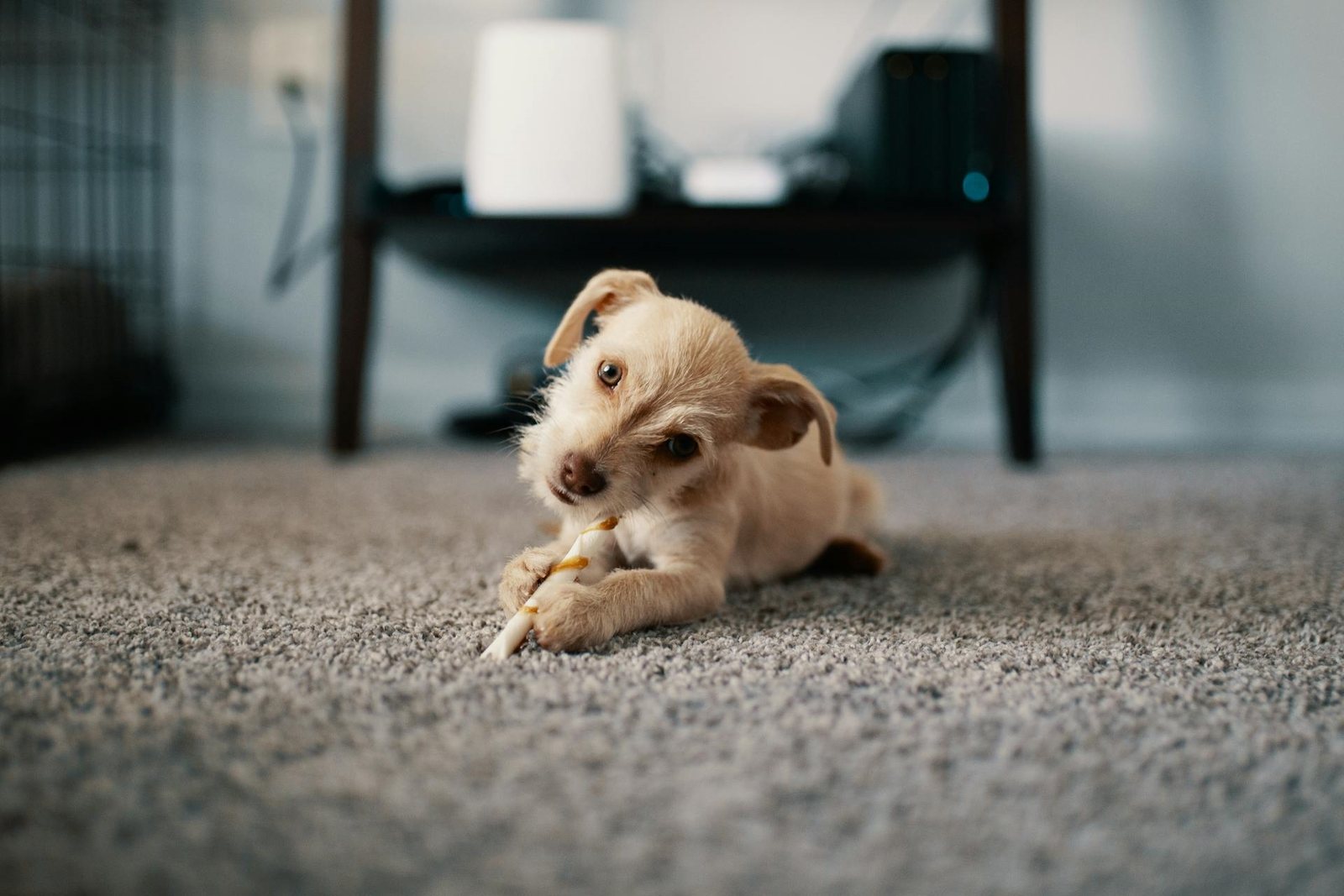
Where pets damage carpet, and why
Pet damage follows a pattern. Dogs dig at closed doors because they want to be on the other side. Cats scratch where they can get a good grip, usually at a doorway edge or a corner. Puppies chew loose tufts and edges. The result is almost always the same: frayed, pulled or missing carpet right at a doorway, where everyone walks and everyone sees it.
- Bedroom and bathroom doorways, the most common spot by far
- Room corners and closet edges where cats scratch
- Transitions to tile or wood where the carpet edge is exposed
- Stair edges and landings
- Pulled runs, especially in berber, where one snagged loop unravels a whole line
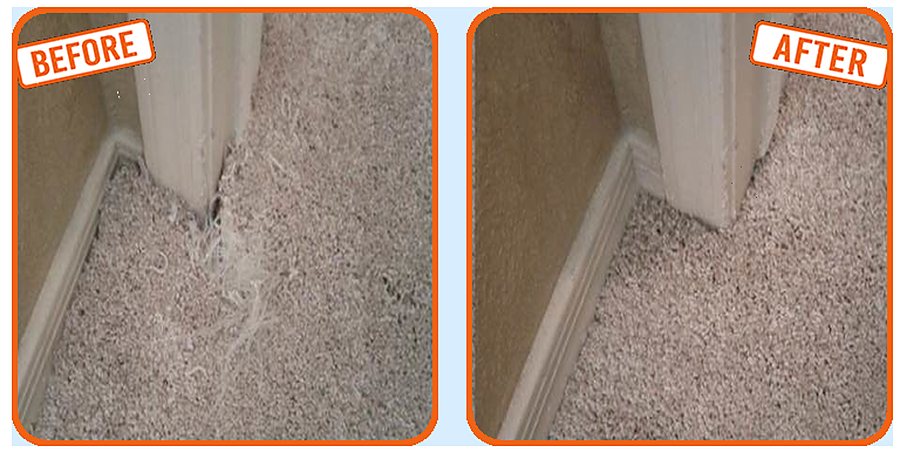
How we repair pet-damaged carpet
- Measure the real damage
Pet damage often extends under the door and along the tack strip. We check how far the pulled and loosened carpet goes.
- Find a matching piece
A remnant or a donor piece from a closet gives a true match. Doorway repairs are often small enough that a closet piece covers it easily.
- Cut out and replace
The damaged section is cut out along the rows of the backing and the new piece is installed with the pile running the right way.
- Re-secure the edge
At doorways and transitions we re-secure the carpet on the tack strip or finish it into a transition so it can't be lifted easily again.
- Blend and check
We groom the pile across the seams and check the repair with the door opening and closing over it.
Pet damage on different carpet types
Berber and other loop carpets are the most vulnerable. A single claw caught in a loop can pull a run across the room, so pulled loops should be fixed before they spread. Plush and frieze carpets hold up better to claws, but chewed edges at doorways fray quickly once the backing is exposed. On every type, the fix is the same idea: remove the damaged fibers back to sound carpet, set in a matching piece with the pile and rows lined up, and secure the edge so it can't be pulled again.
Pet damage in rentals and condos
For tenants, a chewed doorway is one of the most common move-out deductions, and a repair usually costs far less than the charge for replacing the room. For landlords and condo owners, repairing between tenants keeps the unit rent-ready without a full carpet replacement. We can usually schedule around move-out dates and building rules so the unit is ready on time.
Pet-damaged carpet repair cost
Pet-damage repairs typically run $150 to $300, depending on the size of the damage and whether the edge or transition also needs rebuilding.
Typical ranges for South Florida homes. Your exact price is confirmed at the free estimate, before any work starts. See the full price guide.
Keeping it from happening again
We can repair the carpet, but the habit stays with the pet. A few things help:
- Leave the door slightly open or use a baby gate, so the pet isn't frustrated by a closed door.
- Put a hard threshold mat or a clear protector across the doorway while you train.
- Give cats a scratching post near the corner they've chosen.
- Trim nails regularly. Shorter nails snag fewer loops.
Repair the damage, then deal with stains and odor
Pets that damage carpet often leave stains and odor too. While we're there we can check the room with a UV light, which shows urine spots that are invisible in normal light. After the repair, pet stain removal lifts the visible marks and pet odor removal treats urine in the backing and pad. We can quote all three at the same free estimate.
Lifetime Labor Guarantee. If a repair we did comes apart because of our workmanship, we come back and fix it at no labor cost. New pet damage is a new repair.