
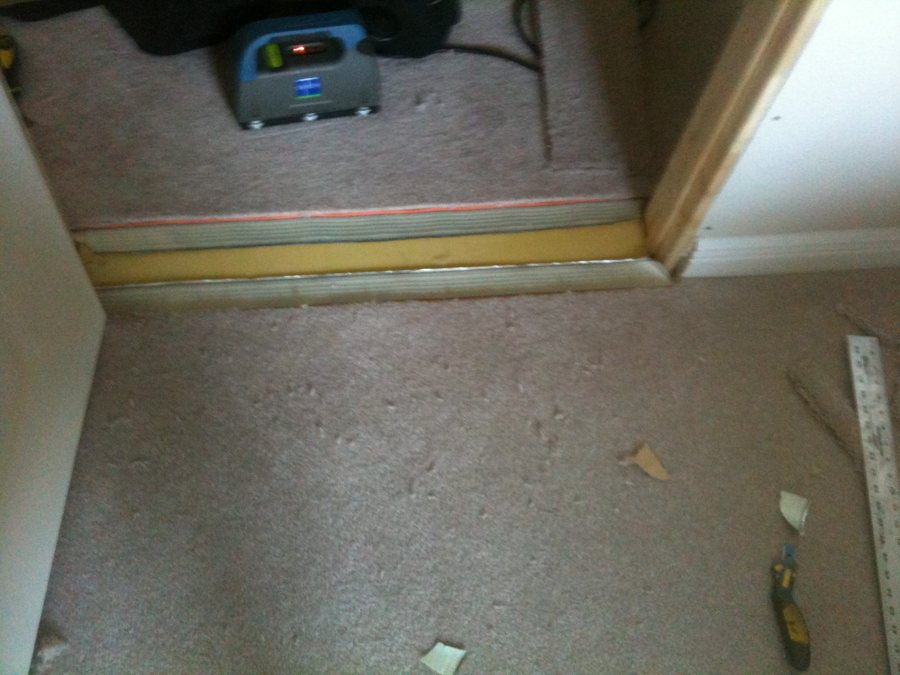
Seams: where two pieces of carpet meet
Almost every room of wall-to-wall carpet has at least one seam, because carpet comes in fixed-width rolls. When a seam is installed well, you can't see it. When the seam tape fails, the carpet was cut off the row, or the carpet is loose and pulling, the seam opens into a visible line, a gap, or a raised ridge.
- Split or gapping seams where you can see the backing between the two sides
- Peaking seams that rise into a ridge, usually because the carpet is too loose or the seam was not stretched
- Fraying seam edges where tufts are pulling out along the joint
- Visible seam lines caused by pile running different directions on each side
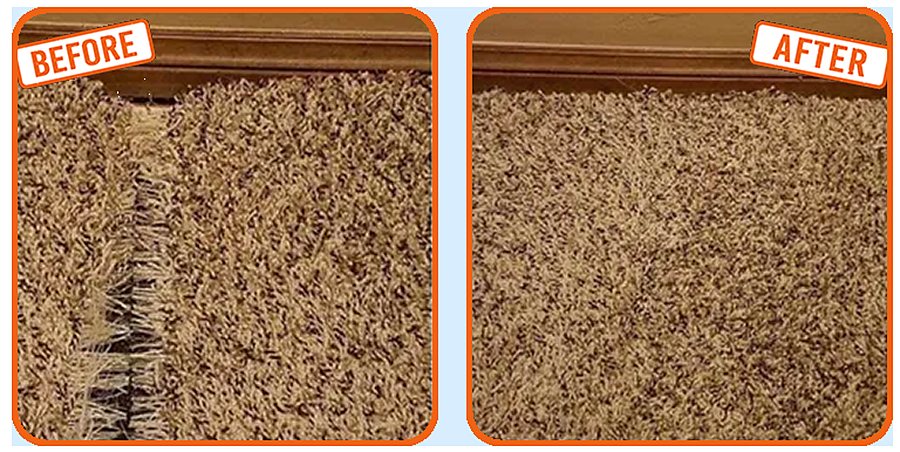
How we repair a seam
- Find the cause
A seam that keeps failing is usually a symptom. If the carpet is loose, we re-stretch it first, because a seam under constant movement will open again.
- Open and clean the joint
We lift the seam, remove old failed tape and trim any frayed or damaged edges straight along the rows.
- Re-bond with new seam tape
New heat-activated tape is laid under the joint and both sides are pressed together with a seaming iron so the edges meet tightly.
- Seal the edges
Cut edges are sealed so tufts can't work loose and the seam doesn't start fraying again.
- Groom the pile
We blend the pile across the joint and weight it while the tape sets.
Transitions: carpet meets tile, wood or vinyl
In South Florida homes, carpet bedrooms often meet tile hallways, and carpet stairs meet wood or tile landings. Those edges take the most abuse: vacuums catch them, pets dig at them, and doors drag over them. When the transition fails, the carpet edge frays, lifts and becomes a trip hazard.
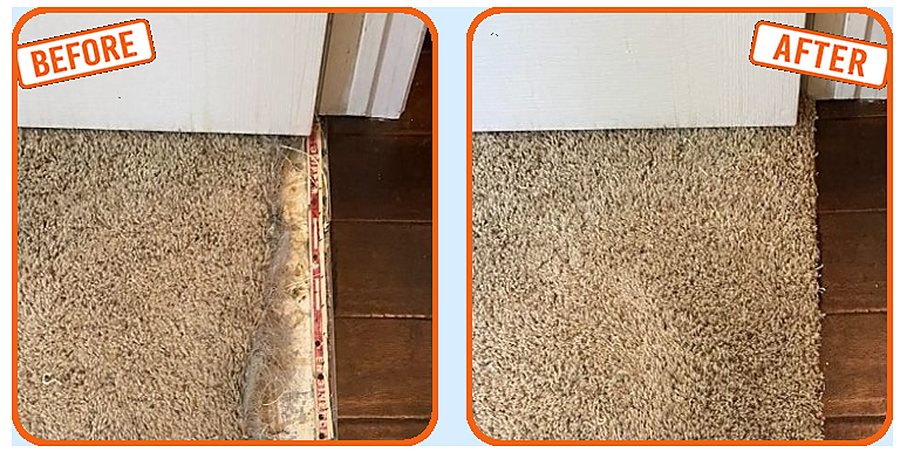
We repair transitions by trimming back the damaged edge, patching in carpet if the edge has worn short, and finishing it with the right method for the floor it meets: tucked into a metal or wood transition strip, secured on a pinless gripper, or folded and bound. The goal is an edge that stays put and looks deliberate.
Signs a seam is failing
- A visible line or gap that wasn't there when the carpet was new.
- Edges that fray, unravel or catch on a vacuum.
- A raised ridge or "peak" running across the room.
- A seam that has started to separate in a doorway or hallway, where traffic is heaviest.
Seams usually fail for one of three reasons: the carpet has loosened and is pulling on them, the original seam tape or adhesive wasn't heated properly, or a vacuum with a beater bar has worked at a weak edge. Fixing the seam without fixing the cause doesn't last, so if the carpet is loose we'll recommend re-stretching at the same time.
Seams in South Florida homes
Many condos and single-family homes here have long, open floor plans where several widths of carpet meet. Combine those long seams with strong AC cycles, humidity and furniture being moved for seasonal guests, and seams take more strain than they would elsewhere. A properly made seam with heat-activated tape, sealed edges and a fully stretched carpet is the best defense.
Seam and transition repair prices
Seam and transition work usually falls into the larger-repair range because it often involves re-stretching or patching as well. We price it at the estimate once we've seen the cause.
Typical ranges for South Florida homes. Your exact price is confirmed at the free estimate, before any work starts. See the full price guide.
After construction and flooring work
New impact windows, sliding doors, baseboards and tile installs are a common cause of seam and edge problems, because contractors lift the carpet to work and put it back loose. If that's happened in your home, we can re-secure the edges, re-bond seams and re-stretch the room in one visit.
Lifetime Labor Guarantee. If a seam or transition we repaired comes apart because of our workmanship, we fix it at no labor cost. Read the terms.