
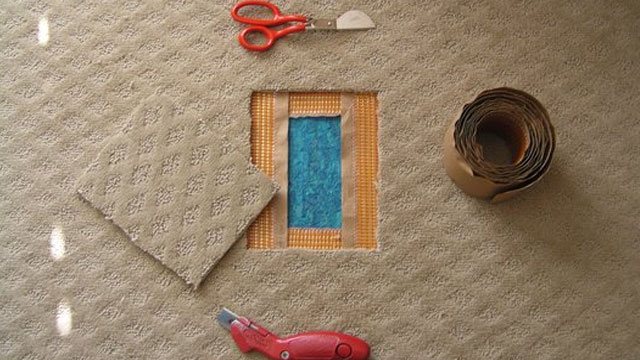
When patching is the right fix
Cleaning removes things that are sitting on or in the fibers. It can't put color back. If the carpet fibers have been bleached, dyed, melted, cut or torn, the only way to make the spot disappear is to replace those fibers. That's what a patch does.
- Bleach and chemical spots from cleaners, acne cream, pool chemicals or hair products
- Permanent stains like hair dye, ink, red wine that has set, rust and plant food
- Holes and gouges from furniture, moving equipment or snags that ran
- Damaged areas under removed furniture or built-ins where the carpet was never laid or was cut around
- Small burns (see carpet burn repair)
- Areas pets have dug at (see pet-damaged carpet repair)
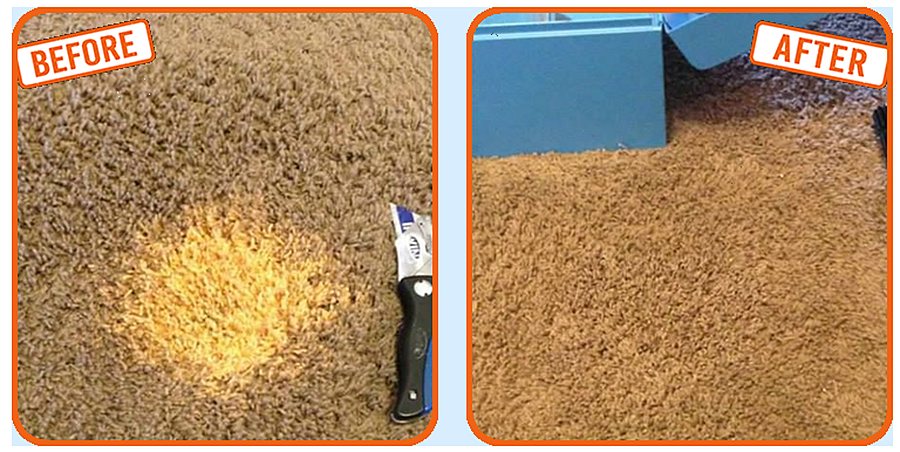
What makes a patch invisible
A visible patch is almost always caused by one of four things: the wrong donor carpet, pile running the wrong way, a cut that ignores the rows of the backing, or a weak seam that lets the edges fray and lift. We control all four.
A saved remnant, or carpet from inside a closet that has had the same sun and wear as the room.
Carpet pile leans one way. We mark it before cutting so the patch reflects light like the carpet around it.
We cut along the rows of the backing, which keeps tufts intact and makes the seam line disappear into the pile.
Heat-activated seam tape holds the patch, and the cut edges are sealed so they don't unravel.
How we patch carpet
- Assess and plan
We look at the damage, the carpet type and the wear, and decide on the patch size and where the donor piece will come from.
- Cut out the damage
A clean cut along the rows removes the damaged area, slightly larger than the visible spot so no damaged fibers are left.
- Cut the donor piece
Using the cut-out as a template, we cut an identical piece from the donor carpet with the pile running the same way.
- Bond it in
Seam tape is heated under the joint, the patch is pressed into place and the edges are sealed.
- Blend the pile
We brush the fibers across the seam so they interlock, then check the patch in normal light.
Small spots versus large areas
A small bleach spot or hole can often be fixed with a patch only a few inches across. Larger damage, like a ruined area where furniture sat on a wet floor or carpet that was cut around a removed cabinet, needs a bigger piece and longer seams. Bigger patches are still very effective, but where we place the seams matters more, so we plan them along natural lines such as the edge of a rug, a doorway or under furniture.
Patching versus replacing a room
A patch makes sense when the damage is limited to one or a few areas and the rest of the carpet still looks good. If the carpet is worn out everywhere, faded unevenly, or the damage covers a large part of the room, replacement may be the better value, and we'll tell you that honestly at the estimate.
Carpet patching prices
Most patches fall in the small-patch range. Larger areas or multiple spots are priced at the estimate.
Typical ranges for South Florida homes. Your exact price is confirmed at the free estimate, before any work starts. See the full price guide.
A note on older and sun-faded carpet
Carpet changes color over the years, especially near sliding doors and windows in South Florida sun. A remnant stored in the garage may be slightly brighter than the room. Closet carpet usually matches better because it has aged indoors with the rest of the floor. If we expect any visible difference, we'll tell you before we cut, and suggest the best option.
After a patch, a professional carpet cleaning helps the whole room look even, because the patched area and the rest of the carpet are freshened at the same time.
Covered by our Lifetime Labor Guarantee. If a patch we installed lifts or comes apart because of our workmanship, we fix it at no labor cost. See what's covered.