
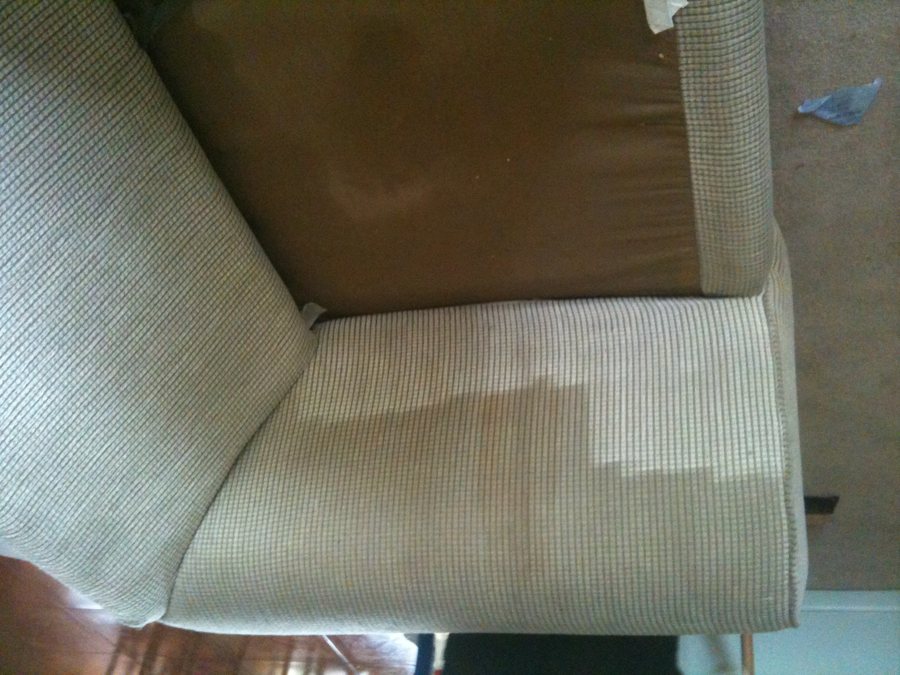
Why furniture needs a different approach than carpet
Upholstery fabric is more delicate than carpet. Some fabrics can take water-based cleaning well, some shrink or bleed dye, and some brown if they get too wet. Cushions have foam inside that holds moisture. That's why upholstery should never be cleaned with the same tools and amount of water as a carpet.
Before we clean anything, we check the manufacturer's cleaning code and test the fabric in a hidden spot. That tells us which method and solution are safe, and whether the piece should be cleaned at all.
What we clean
Including seat cushions, backs, arms and skirts.
Accent chairs, dining chairs, recliners and rockers.
Upholstered ottomans, benches and fabric headboards.
Fabric cushions that pick up sunscreen, pollen and mildew.
Understanding fabric cleaning codes
- W: water-based cleaning is safe.
- S: solvent-based (dry) cleaning only. Water can spot or shrink the fabric.
- W/S: either method can be used, with care.
- X: vacuum only. The fabric should not be wet-cleaned at all.
The code is usually on a tag under the seat cushions or on the frame. If there's no tag, we test a hidden area before deciding on a method.
Our upholstery cleaning process
- Inspect and test
We check the fabric code, look for weak seams, sun damage and existing stains, and test-clean a hidden spot.
- Vacuum thoroughly
Dry soil, crumbs and pet hair are removed first so they don't turn into mud during cleaning.
- Pre-treat soiled areas
Arms, headrests and seat fronts, where body oils collect, get a pre-treatment matched to the fabric.
- Clean with a hand tool
We clean with an upholstery tool sized for furniture, using controlled moisture so the fabric and foam don't get over-wet.
- Groom and dry
The fabric is groomed so it dries evenly, and we give you drying tips before we leave.
Signs your furniture needs a cleaning
- Dark, shiny areas on arms, headrests and seat fronts where body oils collect.
- A dull, flat look to fabric that used to be bright.
- A musty smell, especially in humid rooms or seasonal homes.
- Pet hair woven into the fabric that a lint roller won't lift.
- Spots from food, drinks or kids that have been there a while.
Cleaning on a regular schedule, roughly once a year for most homes, keeps fabric looking better for longer, because soil is abrasive and wears the fibers each time someone sits down.
Before and after we visit
Before we arrive, remove throw pillows you don't want cleaned and any loose items from the furniture. After cleaning, keep pets and kids off it until it's dry, and avoid putting colored throws or newspapers on damp fabric because dye can transfer. Turning on a ceiling fan and the AC helps it dry faster.
How upholstery cleaning is priced
Cleaning is priced by the job, so we quote it at the same free visit after we've seen the rooms and pieces. You get the exact number before we start. If you're also having carpet repaired or re-stretched, both are quoted together, and a combined visit costs less than separate trips.
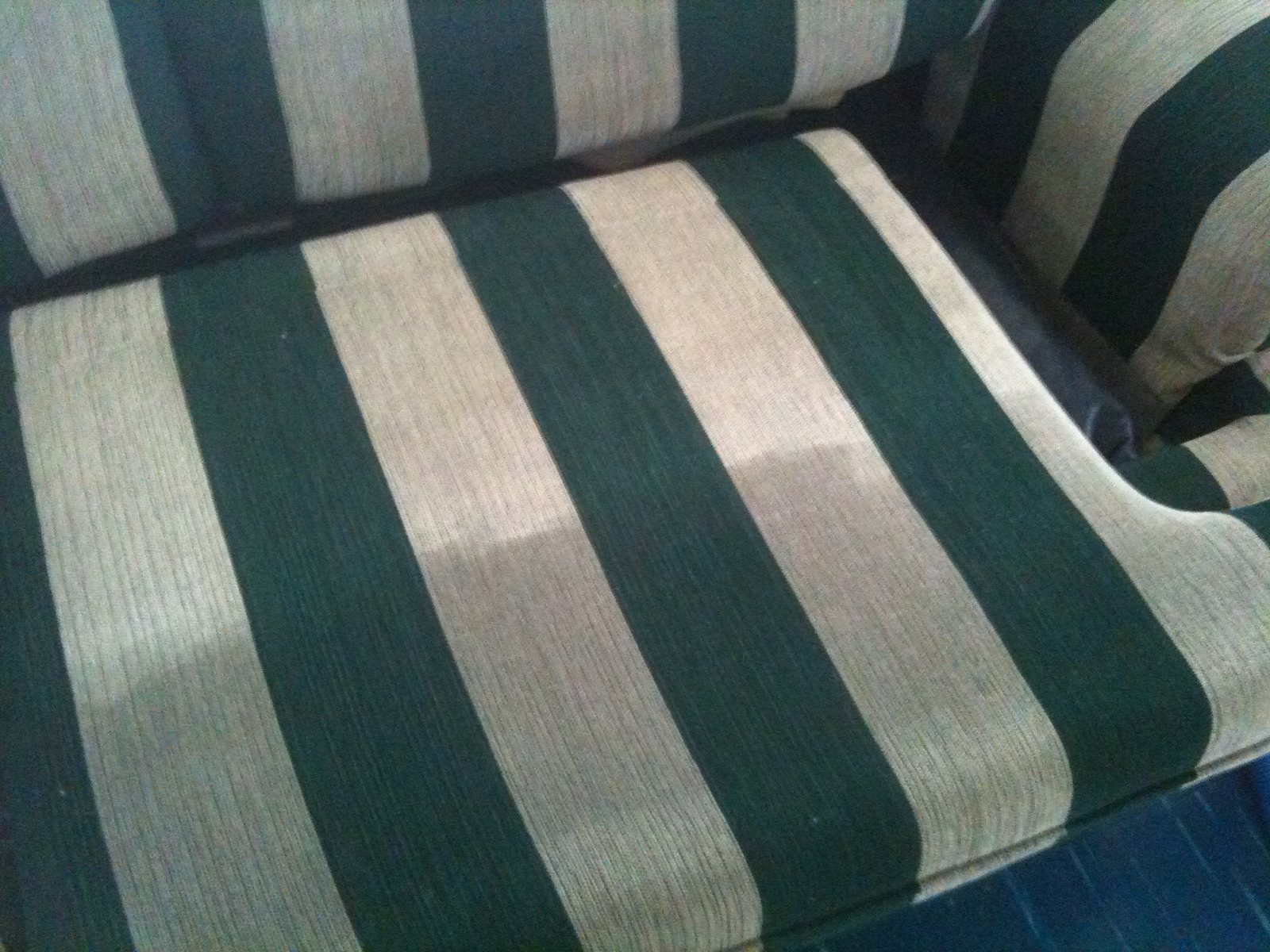
Fabric that looks fine from across the room often tells a different story up close. The cleaned stripe in the photo above is typical. Most sofas carry far more soil than their owners expect, because it builds up so gradually that you stop noticing the color has shifted.
Leather, mattresses and the rest of the room
Leather needs a different process entirely: see leather sofa cleaning. We also offer mattress cleaning, and if the sofa sits on carpet, carpet cleaning on the same visit makes the whole room feel new.